“Winning/Won” – Sermon Audio

On Sunday, January 19, I preached a message at Wildwood Community Church based out of Philippians 1:19-24.  I have posted the sermon audio here for those who want to listen to the message again or share it with a friend.  You can either listen to the message via the online media player or download the mp3 to listen to later.

To listen to the message online, use this player:

To download the message to listen to later, follow this link:

Winning/Won

Additionally, this message was the final message in our Student Ministry retreat (D Now).  To see a video recap of our D Now weekend, watch the video below:

Chosen & Changed (Sermon Audio)

Chosen & Changed Sermon.009

This past Sunday at Wildwood Community Church, I preached a message rooted in Romans 8:14-17 entitled “Chosen & Changed.”  This message was surrounded with stories of Wildwood families who have adopted or participated in Foster Care.  Below you will find the podcast of the day’s message (including the audio of the testimony videos).  Additionally you will find the videos of the stories shown in the worship service.

I hope these resources help you reflect on the message more this week as you listen again or share these resources with others.

To listen to the sermon audio online, use the audio player below:

To download the audio file to listen to later, click on this link:  Chosen & Changed

The two videos are shown below:

Chosen & Changed – Preview

When your life has taken a similar path to mine, you become very familiar with Paul’s Epistle to the Romans:

  • I grew up going to church every Sunday.  This meant I have heard messages from Romans my entire life.  This little epistle is a “preacher’s gold mine.”
  • I came into a personal relationship with Christ in high school, and one of the first Bible Studies I was ever involved in, was studying the book of Romans.
  • I was deeply involved with Campus Crusade for Christ while a student at OU.  As a part of my ministry with Cru, we memorized the “4 Spiritual Laws,” a short book filled with verses from Romans that I memorized.
  • When I graduated from OU, I was given my first commentary by my friend Todd Stewman as a graduation gift . . . William Newell’s “Romans: Verse by Verse.”
  • I attended seminary where I took two entire classes that focused on the book of Romans in two different languages (Greek and English)!
  • While working as the College Pastor at Wildwood Community Church, I led three different small groups of people through the book of Romans and taught through Romans verse by verse on Sunday mornings to college students.
  • I even co-wrote a Bible Study on Romans 1-8 with a variety of people at Wildwood including Bob Reed and Charissa Fry on two different occasions.

Based on this experience, you would think that I would have a pretty good working knowledge of the book . . . that’s why when I started studying Romans 8:14-17 a few weeks back for a message I was preaching at Wildwood Community Church,  I was so excited to see something “new” in these verses that will form the backbone of my sermon on Sunday, January 5, 2014.  (Isn’t God’s Word deep!)

I say “new” because there is nothing “new” in this book . . . it is 2000 years old.  However, it was “new” to me, and it blessed me greatly.  I am excited to share this truth with you this Sunday at Wildwood Community Church as a part of our “Adoption Sunday” worship service (a worship service we moved after weather forced us to cancel services on November 24.)

Hope you can join us to look at this new/old truth in either our 9:30 or 10:50 worship service.

Unboxed (Sermon Preview)

Christmas Box

After all the presents are opened.  After all the food is eaten.  After all the Bowl Games have been played . . . it is time to pack Christmas up for another year.

You know the drill.  Take the ornaments off of the tree.  Sweep the pine needles up from the floor.  Detach the Christmas lights from the front of the house.  Pack your nativity away for another year.

In a few short hours, you will be in full blown “January mode” and the red and green will be in the attic for 330 more days.

This is a normal process, and an important one.  A Christmas tree just would not look right in your living room in July!  However, as you put your Christmas decor up over the next couple of weeks, let me remind you of a couple of things:

  1. As you pack away your garland, don’t box up your God as well.  It is far too easy to live a spiritual life only around Christmas and Easter.  At these holiday times of year, there are cultural prompts that remind us of the Savior and we make it a priority to read devotionals, attend services, and live a God-aware life.  However, Jesus did not just die for the holidays!  He came that we might have life every day of the year.  Do not fall to the temptation of packing away your faith with your decorations this January.
  2. God is not contained to the holidays.  At Christmas time, we feel compelled to do things that we do not necessarily do the rest of the year.  Being in the “Christmas Spirit” means being more compassionate, giving, or kind.  In a sense, the idea is, be nicer, kinder, better BECAUSE it is Christmas season . . . you can go back to being “normal” in January.  However, we do not serve a God who is seasonally affected.  Our Heavenly Father is just as gracious on July 24 as He is on December 24.  Jesus is just as compassionate and loving on that blah March morning as He is on Christmas morning.  Isn’t that amazing?  Isn’t that encouraging to know?  Though we are seasonally affected, our God never is.  He gives us special days of celebration to focus our hearts, but His heart never needs refocusing.  We can approach Him every minute of every day and find the same God.

Since our God is always the same.  Since our God is never “boxed” and placed in the attic, we might expect to see Him be at work year round.  That is why this Sunday at Wildwood we will be taking some time to reflect on God’s goodness in the lives of many of our members over the past 12 months.  We will be hearing a number of stories from Wildwood members about how God has been at work in tangible ways . . . not just during the holidays, but ALL THE TIME.  By hearing these stories and praising God for them, we will also be setting our expectations for 2014.  Since our God is not “boxable” and since He never changes, we can expect to see Him work in our lives in the coming year as well.

Join us this Sunday at Wildwood Community Church for either our 9:30 or 10:50 worship service.

Behind the Music: O Holy Night

In 1847, a French Catholic Priest commissioned a Christmas poem from local winemaker Placide Cappeau de Roquemaure.  This local poet penned the words to “O Holy Night” while traveling to Paris.  After writing the poem, Cappeau believed these verses would do well set to music.  Not being a musician, Cappeau approached noted composer Adolphe-Charles Adam to add music to his message.  After Adam added song to Cappeau’s words, the finished product was first sung by the choir at the Christmas Eve Mass in 1847.  The song quickly became popular and was sung all over France.  After time, however, Cappeau left the Catholic Church to become a socialist.  Adam (the song’s composer) was actually Jewish and did not believe that Jesus was the Son of God.  Once the church saw the exodus of Cappeau and learned of Adam’s religious beliefs, they banned the song from being sung in churches.  In fact, the church’s official stance on the song was that it embodied a “total absence of the spirit of true religion.”

Because this song was blackballed in its home country, it may have never reappeared had it not been for American John Sullivan Dwight who heard the song and fell in love with it.  On top of the fact that Dwight loved the total message of the song, he had a special affinity for the third verse that says of Jesus, “Chains shall He break for the slave is our brother, and in His name all oppression shall cease.”  Dwight was an abolitionist and found in Cappeau’s words a hymn that resonated deep within his soul.  Dwight translated the song into English and on the verge of the United States Civil War, introduced the song to American Churches.  The song gained quick acceptance in the North due to its anti-slavery message.  Once inside the American Church, the song exploded around the world and is one of the most famous Christmas songs today.  Eventually, the French Catholic Church reintroduced the song because of the deep love people had for it.

As I reflect on this story today, I am reminded of a couple of interesting passages of Scripture.  In Philippians 1:15-18 the Apostle Paul says, “It is true that some preach Christ out of envy and rivalry, but others out of goodwill.  The latter do so in love, knowing that I am put here for the defense of the gospel.  The former preach Christ out of selfish ambition, not sincerely, supposing that they can stir up trouble for me while I am in chains.  But what does it matter?  The important thing is that in every way, whether from false motives or true, Christ is preached.  And because of this I rejoice.”  Also, Mark 9:38-40 says, “‘Teacher,’ said John, ‘we saw a man driving out demons in Your name and we told him to stop, because he was not one of us.’  ‘Do not stop him,’ Jesus said.  ‘No one who does a miracle in My name can in the next moment say anything bad about Me, for whoever is not against us is for us.‘”  These two passages of Scripture remind me that God does not use perfect people to accomplish His plans.  In fact, He does not always even use believing people to accomplish His plans.  God can call forth praise for Himself from any vessel He chooses to use.  In the case of “O Holy Night,” God used a Socialist French poet and a Jewish composer to inspire praise and worship among His people.  Now THAT is sovereignty.

Sometimes we begin to think that God only chooses those with the most pristine resumes to accomplish His plans, but the fact is that God will do His work through whoever He chooses to use.  This is good news for those of us with less than perfect resumes (read: all of us).  If God can call forth praise from those who reject Him, how much more can He use those of us who (though imperfect) are looking to Him for direction and leaning on His grace for daily strength!  If you are a believer in Christ rejoice this Christmas as you hear “O Holy Night” sung.  On top of the great truth this song puts forth, the story behind it reminds us of God’s gracious intentions of using fallen people to accomplish His grandest plans.

One last note about this great Christmas song . . . in 1906,  Chemist Reginald Fessenden (working with Thomas Edison) turned on a microphone on Christmas Eve and spoke into it, reading the Christmas story from Luke 2.  After reading the story, Fessenden picked up his violin and played the hymn “O Holy Night” into that mic.  What makes this significant was that Fessenden’s performance was the first ever broadcast of music over the new technology of radio.  Telegraph operators on ships and in newspaper offices around the country, instead of hearing their usual codes of clicks and pops, heard clearly the words of the Bible and the beautiful tune of Cappeau and Adam.  If you ever get asked the trivia question, “What was the first song played on radio,” you now know the answer!  From its very beginning, radio (like the printing press before it) was being used to spread the knowledge of Christ to all the people!

O holy night! The stars are brightly shining,
It is the night of the dear Saviour’s birth.
Long lay the world in sin and error pining.
Till He appeared and the soul felt its worth.
A thrill of hope the weary world rejoices,
For yonder breaks a new and glorious morn.
Fall on your knees! Oh, hear the angel voices!
O night divine, the night when Christ was born;
O night, O holy night, O night divine!

Led by the light of faith serenely beaming,
With glowing hearts by His cradle we stand.
So led by light of a star sweetly gleaming,
Here came the wise men from  Orient land.
The King of kings lay thus in lowly manger;
In all our trials born to be our friend.
He knows our need, to our weakness is no stranger,
Behold your King! Before him lowly bend!

Truly He taught us to love one another,
His law is love and His gospel is peace.
Chains shall He break, for the slave is our brother.
And in his name all oppression shall cease.
Sweet hymns of joy in grateful chorus raise we,
Let all within us praise His holy name.
Christ is the Lord! O praise His name forever,
His power and glory ever more proclaim!

Advent #10 – The Myth and the Messiah

Santa 1

Santa Claus . . . the name alone brings a smile to most all of our faces.  Think back for just a moment to the days leading up to Christmas morning when you were six years old.  Think of all you believed to be true about Santa Claus.  Of all the things that you once believed about him, what seems the most ridiculous to you now?  What “fact” about the legend of Santa do you now find most unbelievable?

For some of you, Santa’s mass production of toys and gifts might seem most ridiculous.  I mean, elves as employees making everything from Star Wars action figures to Sponge Bob socks to Strawberry Shortcake sleeping bags is a little hard to fathom . . . especially all in one giant production facility located somewhere near the North Pole!  For others of you, Santa’s mode of transportation might seem most unbelievable.  As if flying reindeer were not hard enough to stomach, we were also supposed to believe that an open air sled pulled by nine herbivores could somehow traverse the globe in one twelve hour night!  Even taking into account the rotation of the earth and the time change, this is a little hard to imagine to our adult minds.  Surely many of you thought of these items as you pondered the existence of Kris Kringle.  But as amazing as these things are, they still are not the most amazing thing to me about Santa.

For my money, the most unbelievable thing about Santa Claus is not his generosity, or his production capability, or his mode of transportation, or his appearance, or his schedule.  What amazes me most about Santa is that he would actually come and visit me.  He would take my requests, come to my house, slide down my chimney, eat my cookies, drink my milk, and give me presents.  That is what is most amazing to me about Santa Claus.  In my mind’s eye, I can imagine someone so generous.  I can imagine someone so inventive.  But I cannot imagine THAT someone caring about so many others . . . including me.  If for no other reason, that fact alone causes my adult mind to rightly question the existence of Santa Claus, and the facts bear this out.

Now, switch from Christmas myth, to Christmas Messiah.  For a moment, think about the historical account of Jesus, the Son of God coming into the world.  What is it about this story that you find most amazing?  For some of you, maybe you marvel at the humility it takes for God to take on the limitations of a human body.  For others of you, maybe you are astounded that this same God would be born into a barn, instead of a castle.  Still, for others, maybe you are awestruck by the fact that the Son of God would be born into a human family.

For my money, though, the most awesome thing about the birth of Jesus Christ is that He was born because He cared about me.  He understood my separation from God because of my sin, so He came to my planet, lived my kind of life, endured my kind of temptation, felt my kind of pain, and died in my place, to give me the unbelievable yet believable gift of eternal life!  That is what stops me in my tracks as I ponder the Christmas holiday.

In my mind’s eye, I can imagine a God so generous.  I can imagine a God so gracious.  I can imagine a God so good.  But I am awe struck that this God would apply those truths to specific sinful people . . . including me.  Some have taken this truth, processed it through their “adult” minds of intellect and reason and concluded that, like Santa Claus, such a Jesus cannot exist . . . however, the facts do not bear this out.  Jesus is real.  He is alive.  He was born into this world, and He died to rescue us out of it!  This Christmas as you ponder the awesome events of the baby in the manger, remind yourself of this fact . . . He came for you.

“From His (Jesus) fullness we have all received, grace upon grace.” (John 1:16)

Advent #9 – Wonder at Christmastime

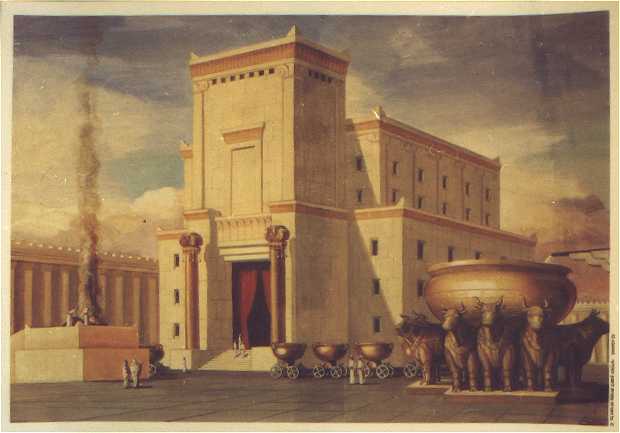
firsttemple

The year was 959 BCE.  The place was Jerusalem.  500 years had passed since God had called His people out of Egypt and through the Red Sea.  King David had passed away and now the ultimate “wise guy,” King Solomon had ascended to the throne.  By God’s design, Solomon completed a project his father David had planned for . . . the construction of a Temple for God in the capital city.  Inside the Temple, the ark of the covenant would be placed and God’s presence would hover.

In the year 959, Solomon would dedicate the Temple and the words he shared provide a powerful reminder for us at Christmas time.  In 1 Kings 8:27, Solomon says of the Temple:

“But will God indeed dwell on the earth?  Behold, heaven and the highest heaven cannot contain You; how much less this house that I have built!”

As Solomon looked at the impressive Temple the people of Israel had just constructed, one of the seven “wonders of the ancient world,” he marveled at the thought that God would inhabit such a common place.

Imagine that you were standing in front of the White House, the Taj Mahal, Buckingham Palace, or Notre Dame Cathedral.  As you look at these impressive structures, despite all their grandeur, you probably would say something similar to Solomon.  As beautiful as the best of our buildings are, it is impossible for mankind to create an adequate “home” for an eternal, omnipotent, omniscient God.

And yet at Christmas time, we celebrate God coming, not to a palace, but a stable!  We celebrate God arriving not in a chariot but in the womb of a teenaged girl riding on a donkey.  We celebrate God not merely sending a telegram through the stars, but arriving in the flesh.  Listen to what John says in His Gospel, John 1:14, 18:

“And the Word became flesh and dwelt among us, and we have seen His glory, glory as of the only Son from the Father, full of grace and truth . . . No one has ever seen God; the only God, who is at the Father’s side, He has made Him known.”

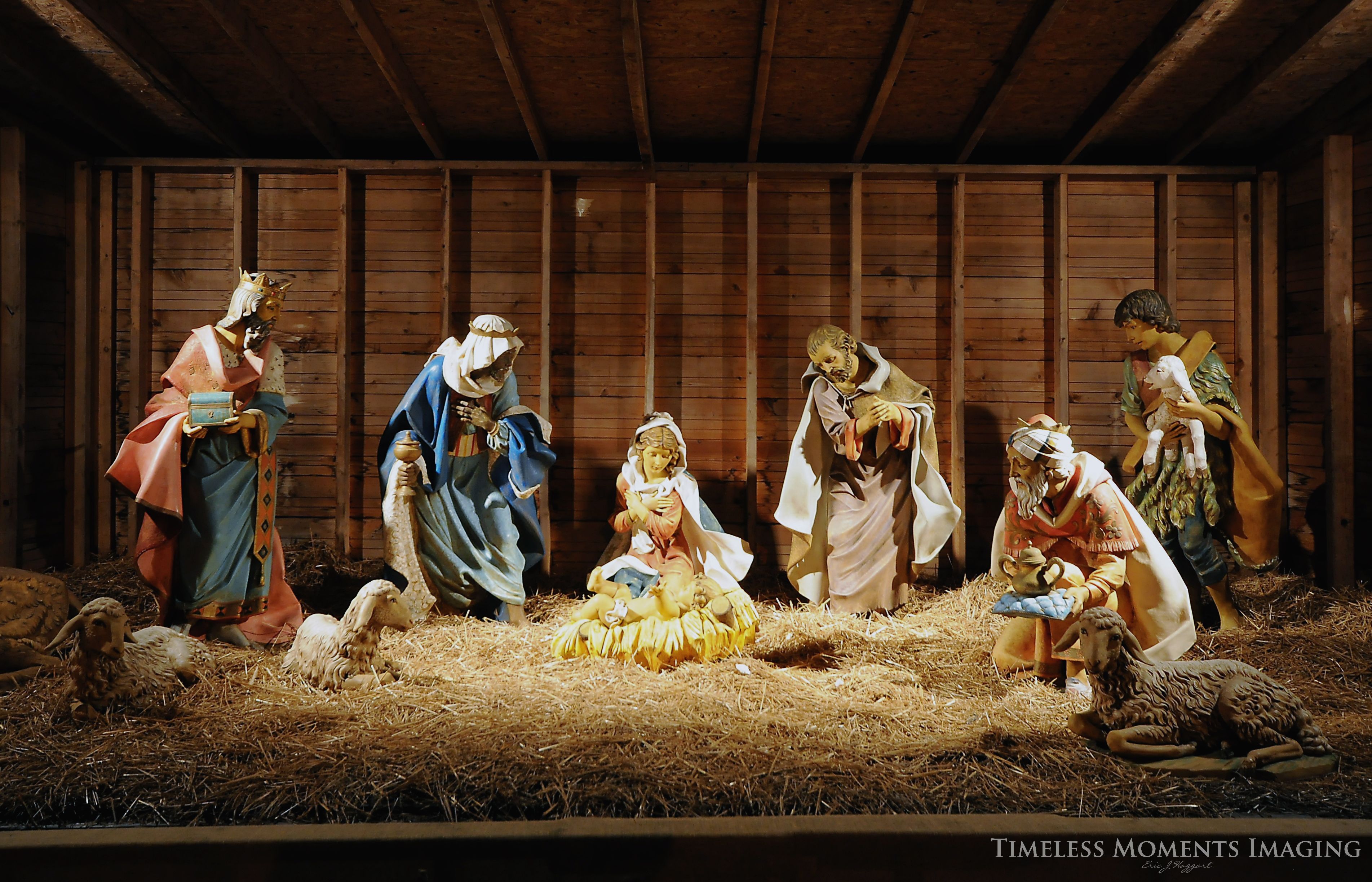
Nativity setWhen we look at nativity sets around our houses this Christmas, we should wonder like Solomon did, “Did God indeed dwell upon the earth?”  The answer to this question is an emphatic YES!

Jesus moved into our neighborhood.  Jesus spoke in a way we could understand.  Jesus demonstrated all Grace and Truth so that we might KNOW GOD.  By living out a life in human flesh and having that life preserved for us in the Bible, we can understand what God’s character is like in three dimensions.

Do not let the wonder of the incarnation slip by you this year.  God did indeed dwell on the earth, and we are blessed beyond measure as a result.

An Heir of the King

Elvis and LIsa

Lisa Marie Presley.  What an interesting case study in sociology she is.  As the daughter of the legendary King of Rock, Elvis Presley, the ex-wife of the King of Pop, Michael Jackson, Lisa Marie is a queen twice over.  But all her marriages and failed relationships are not the part of her life that I want to focus on here. What I want to talk about is her inheritance.  It is quite a story . . . have you heard it?

Lisa Marie Presley was the daughter of Elvis, and when Elvis died, he made Lisa Marie the sole heir of his estate.  At the time, the estate was worth only $5 million, but over the past forty years since Elvis’s death, the estate has grown to a value of over $300 million with the sale of greatest hits albums and tours of Graceland (Elvis’s home in Memphis).  That is some serious change!  But there is something even more interesting to me about Lisa Marie’s inheritance than its large value . . . it was the way in which the inheritance was given.  Lisa Marie was only nine years old when Elvis died, and though the estate was promised to her, she would not take ownership of it until after her 25th birthday.  Think of that. . . she had to wait 16 years to become the owner of the estate.  She was always the heir, but she did not receive the riches until she turned 25.  Until that time, the estate would be under managers who would take care of things until her time came.  Can you imagine what that would be like?

Well, the way many of us think about the Christian life, we certainly can imagine this scenario . . . in fact, we think we live it everyday.  Many people believe that as Christians we are heirs to a great inheritance that we cannot yet partake of.  It is being “held” for us until either Christ returns or we die and go to be with Him.  Until that time, many feel that they are simply an heir awaiting a promise.  Now, when it comes to our ultimate glorification, the ridding of our flesh and the taking on of a new Body in the presence of God, this would be a correct statement.  Those things will not be realized until the end . . . but that is not the sum total of the inheritance and blessing that God has given us.  God has blessed us not just with a promise for the future, but also with a provision for today!  As believers in Jesus Christ, we do not have a time delay on the fortune that has been granted to us.

What do I mean?  For further explanation, look at Galatians 4:1-7 as it says, “Now I say, as long as the heir is a child, he does not differ at all from a slave although he is owner of everything, but he is under guardians and managers until the date set by the father.  So also we, while we were children, were held in bondage under the elemental things of the world.  But when the fullness of time came, God sent forth His Son, born of a woman, born under the Law, so that He might redeem those who were under the Law, that we might receive the adoption as sons.  Because you are sons, God has sent forth the Spirit of His Son into our hearts, crying, ‘Abba, Father!’  Therefore, you are no longer a slave, but a son; and if a son, then an heir through God.”

In that passage, Paul tells the Galatians that there once was a time before the birth of Jesus Christ, when God’s people were like Lisa Marie . . . heirs who had received a promise, but it was a promise with a time contingency on it.  When the appropriate time came, the promise would be fulfilled and all their hopes would be realized.  The amazing thing that Paul tells them is this:  That waiting period is over!  It is now time to experience the joy and blessing of all that God has for you.  This “fullness of time” that Paul refers to is the coming of Christ, His death on the cross, and resurrection from the dead.  Because of those things, the time has now come for the people of God to be released from the deadness of the Law and set loose to the freedom that is found through a living relationship with the risen Christ.  Indeed if you have placed your faith in Christ’s death on the cross for the forgiveness of your sins, you have suddenly been named a “son or daughter” of Almighty God!

So what is this great blessing that we do not have to wait for . . . what is it that we get to inherit now without a further waiting period.  These verses tell us:  We get to experience now the incredible blessing of the coming of God’s Holy Spirit into our hearts.  This is something we get to experience right now if we have trusted in Christ.  The Spirit marks us as God’s children, is given as a deposit for future redemption of our bodies, intercedes for us before God our deepest needs and desires as we pray, and gives us the power and provision to live the life that God has called us to.  I don’t know about you, but I would rather have that forevermore than the rights to “Love Me Tender” any day.

So be encouraged, the blessing begins now!  Because you are a child of the King of Kings, we get to partake of His Grace in this Land.  Not sometime in the future, but right now through the blessing of the giving of His Spirit.

This Sunday at Wildwood we will unpack more of what it means to be adopted as a child of the King as a part of our “Adoption Sunday.”  We will look at adoption from two angles:  Our adoption as children of God (this will be the context of the sermon from Galatians 4), AND we will hear testimonies from several Wildwood families who have adopted (or are adopting) children into their homes.  It will be a great Sunday!  Make plans to join us in either our 9:30 or 10:50 service.

Tables not Rows

photo-1When Christians gather, we often gather in rows.  Have you noticed that?  We file in and sit down on either pews or chairs and look straight ahead.  From this position, we can easily see the cross at the front of the sanctuary, make eye contact with the Pastor in the pulpit, see the words on the projection screen, and watch musicians lead us in singing.  In rows we can see many things . . . however in rows we don’t see “one another.”  In rows, the best we can do is see the back of the head of the person in front of us.

Gathering in rows is not a bad thing to do.  In fact, gathering in rows has its advantages, allowing us to do a number of things including:

  • Focus on the object of our worship . . . the risen Christ, instead of focusing on the new outfit our friend is wearing.
  • Maximize our space . . . the way to get the most people into the sanctuary is to sit in rows.
  • Unite the entire congregation around a single focal point.

For all of its advantages, however, gathering in rows can also create problems in our understanding of the Christian life (if we are not careful).  The New Testament is full of exhortations for us to connect to “one another.”  Over 50 New Testament commands (40 of them by the Apostle Paul) instruct the Christian to do “______” to “one another.”  Certainly the fulfillment of all these commands is not limited to times of corporate worship, however, after a lifetime of sitting in rows, Christians can row themselves into some wrong conceptions about the Christian life.

While, it is true that God desires me to personally embrace Him in faith, my faith is far more than personal.  It is communal.  It is a faith shared by millions of people.  It is a faith shared by my church . . . by my small group.  Sitting in rows looking at the back of the head of the person in front of me does a good job of making me think about my own faith, but does not necessarily prepare me to think about the Body I have been saved into.

Last SupperIt is interesting that when Jesus instituted a sacred symbol for His followers, He used a meal around a table.  Sure, we sometimes think of the last supper from the upper room as a row (after all we’ve seen the picture right?) but in reality, the Last Supper was held around a table, where intimate fellowship, conversation, and camaraderie were shared . . . along with the cup and the bread.  The group was still gathering around a focal point (the object of their worship Jesus Christ) but they were doing so in a posture that also allowed them to see their fellow follower.  Their faith both connected them to Christ AND to each other.

This Sunday, as we gather at Wildwood Community Church to worship (9:30 and 10:50), we will be gathering around a table – the Lord’s Table.  We will focus on the object of our worship, but we will also remember that the Christian life is often better lived with a table mentality.  I hope you will join us as we celebrate this great truth.

Additionally, we will be celebrating the baptism of 7 people in our morning worship services!

Why Believe in Miracles? (Sermon Audio)

FAQ.001


On Sunday, September 15, I preached (in tandem with Mark Burget) a sermon on “Why we should believe in miracles?”  Specifically, the message talked about the biggest miracle of all,  historical evidence for the resurrection of Jesus Christ . . . as well as looking at why God performs miracles.  In case you missed the message, or if you would like to listen to it again, I have posted it here to my blog.

To listen to the message online, use the imbedded player below:

To download the message to listen to it later, click on the link below:

Why believe in miracles?


FAQ #questions.003